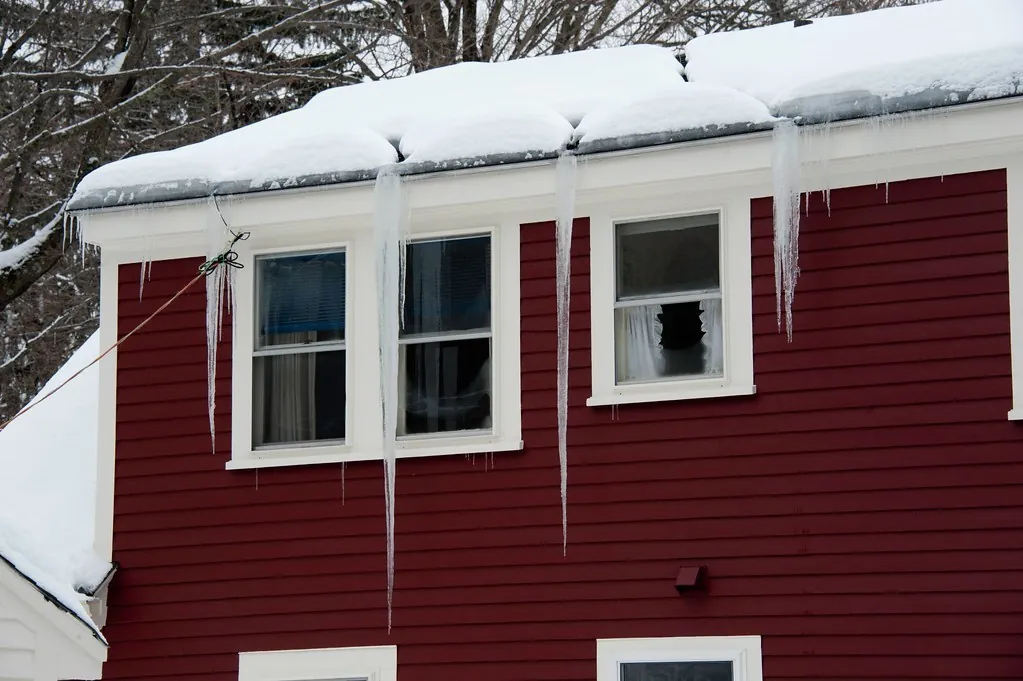
An ice dam forms when snow melts on a warm roof, runs down and refreezes at the cold eaves, trapping meltwater that backs up under shingles and leaks into the attic, ceilings and walls. In Salt Lake City, spring ice-dam meltwater is one of the most common causes of attic and exterior-wall leaks.
How Ice Dams Form on Salt Lake City Roofs
An ice dam starts with heat. Warm air from the house heats the roof, snow on the upper roof melts, and the meltwater runs down to the eaves — which are cold, because they hang past the heated part of the house. The water refreezes there, forming a ridge of ice. More meltwater runs down, hits the ridge, and pools behind it. The pooled water backs up under the shingles and leaks into the attic.
Salt Lake City is built for ice dams: heavy snow, cold nights, and sunny days that melt the snow on the roof while the eaves stay frozen. The older homes in the Avenues and Sugar House, with less attic insulation and ventilation, are the most prone.
Signs of Ice Dam Water Damage Inside Your Home
The signs show up inside, not on the roof. Water stains on a ceiling near an exterior wall. Peeling paint or bubbling plaster. Damp insulation in the attic. A musty smell in an upstairs room. In bad cases, water dripping from a light fixture or running down an interior wall.
If you see any of these in late winter or spring, the cause is often an ice dam — even if the roof looks fine from the ground. The leak is where the water ends up, not where the ice is.
Ice Dam Leak Repair: What Happens
The first step is to stop the water coming in. Then the wet materials are found and dried: attic insulation, ceiling drywall, wall cavities. Moisture mapping shows how far the water travelled, because meltwater runs along framing and shows up far from the leak.
Wet insulation usually has to be removed. Wet drywall is dried or replaced depending on how wet it is. Then the repairs begin — and, separately, the roof itself: whether the roof needs repair is a question for the contractor, and the scope is confirmed on the call, not assumed here.
Preventing Ice Dams Next Winter
The real fix is insulation and ventilation: a well-insulated attic keeps the roof cold, so the snow does not melt and refreeze. Sealing air leaks from the living space into the attic matters as much as insulation. The blog on how to prevent ice dams covers the practical steps, and the frozen-pipe prevention guide covers the same winter.
Frequently Asked Questions
What causes ice dams on Salt Lake City roofs?
Heat from the house melts snow on the upper roof, the meltwater runs down and refreezes at the cold eaves, and the ice ridge traps more meltwater behind it. The pooled water backs up under the shingles and leaks into the attic. Heavy snow, cold nights and sunny days make Salt Lake City prone to them.
How do I know if an ice dam is leaking into my home?
Look for water stains on a ceiling near an exterior wall, peeling paint or bubbling plaster, damp insulation in the attic, or a musty smell in an upstairs room. The signs show up inside, often far from where the ice is.
Can an ice dam damage my ceiling and walls?
Yes. Meltwater that backs up under the shingles leaks into the attic, then into ceilings and walls. It can stain and soften drywall, soak insulation, and — if it stays wet — lead to mold. The damage is often worse than it looks from inside the room.
How is ice dam water damage repaired?
The water coming in is stopped first. Then the wet materials are found with moisture mapping, dried with dehumidifiers and air movers, and repaired or replaced as needed. Wet insulation is usually removed. Whether the roof itself needs repair is confirmed with the contractor.
How can I prevent ice dams next winter?
Insulation and ventilation are the real fix: a cold roof does not melt snow unevenly. Seal air leaks from the living space into the attic, keep gutters clear, and remove snow from the roof edge safely if you can. The blog on preventing ice dams covers the practical steps.
Water, fire or biohazard damage in Salt Lake City? Call now.
One call connects you with an independent local restoration contractor.