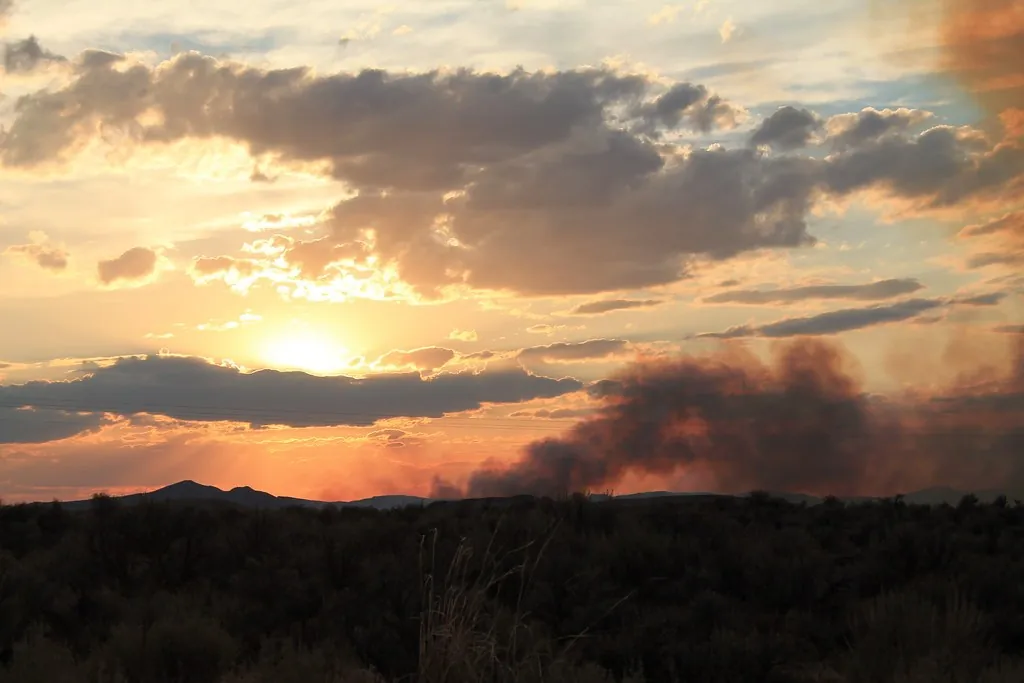
Wildfire smoke damage in Salt Lake City usually comes from smoke drifting in from Parleys Canyon and the Wasatch — it leaves soot and odour in walls, fabrics, ductwork and electronics without any charring or structural damage. Cleanup means soot removal, odour treatment and HVAC cleaning.
How Wildfire Smoke Gets Into a Home
Wildfire smoke does not need an open window. It comes in through vents, gaps around windows and doors, and the HVAC system itself, which pulls outside air in and spreads it through the house. During a smoke event, the air inside a home can be nearly as smoky as the air outside.
In Salt Lake City, the smoke usually drifts in from Parleys Canyon and the Wasatch, carried by the wind down into the valley. It settles in the inversion layer and sits there for days. The wildfire smoke blog post explains what to do while the smoke is in the air.
What Wildfire Smoke Does to Walls, Fabrics and Air
Wildfire smoke leaves fine soot on walls and ceilings, and the soot settles into fabrics, carpets, curtains and upholstery. It gets into ductwork and coats the inside of the HVAC system, so the smell comes back every time the heating or cooling runs. Electronics are affected too — soot settles on circuit boards and inside vents.
Unlike house-fire smoke, there is no charring and no structural damage. The damage is soot and odour, and the cleanup is different because of it: no debris removal, no board up, no rebuild — just soot removal, odour treatment and HVAC cleaning.
Wildfire Smoke Cleanup: What Happens
Cleanup starts with an inspection of how far the smoke travelled — which rooms, which surfaces, whether the ductwork is affected. Then the soot is removed from walls, ceilings and contents, the odour is treated at its source, and the HVAC system is cleaned.
Fabrics and carpets are cleaned or, where the soot cannot be removed, documented for the insurance claim. The smoke and soot cleanup page explains the methods, and the fire damage restoration page covers the wider fire job.
Protecting Your Home From the Next Smoke Season
Smoke season comes back every summer. Sealing gaps around windows and doors helps. Running the HVAC on recirculate during a smoke event keeps outside air out — but the filter needs to be the right kind, and it needs changing after the event. A portable air purifier in the bedrooms helps while the smoke is in the air.
After a smoke event, changing the HVAC filter and cleaning the ductwork stops the smell coming back every time the system runs.
Frequently Asked Questions
How does wildfire smoke damage a home?
Wildfire smoke leaves fine soot on walls and ceilings, settles into fabrics, carpets and ductwork, and coats electronics. There is no charring or structural damage — the damage is soot and odour — but the smell lingers until the soot is properly removed.
Is wildfire smoke damage covered by insurance?
It depends on the policy, and this is worth checking with the owner of the policy before assuming. Some policies cover wildfire smoke damage; some do not. Documentation — photos, lists, the contractor's notes — is needed either way.
How do you clean wildfire smoke from a house?
Soot is removed from walls, ceilings and contents, the odour is treated at its source, and the HVAC system is cleaned. Fabrics and carpets are cleaned or documented for the insurance claim where the soot cannot be removed.
Can wildfire smoke damage electronics and fabrics?
Yes. Soot settles on circuit boards and inside vents, and it embeds in fabrics, carpets and upholstery. Electronics should be inspected before they are switched back on, and fabrics that cannot be cleaned are documented for the claim.
How long does wildfire smoke smell last indoors?
Until the soot is removed — the smell comes from the soot, not from the air. If the soot is cleaned properly, including the ductwork, the smell goes with it. If the ductwork is not cleaned, the smell comes back every time the heating or cooling runs.
Water, fire or biohazard damage in Salt Lake City? Call now.
One call connects you with an independent local restoration contractor.