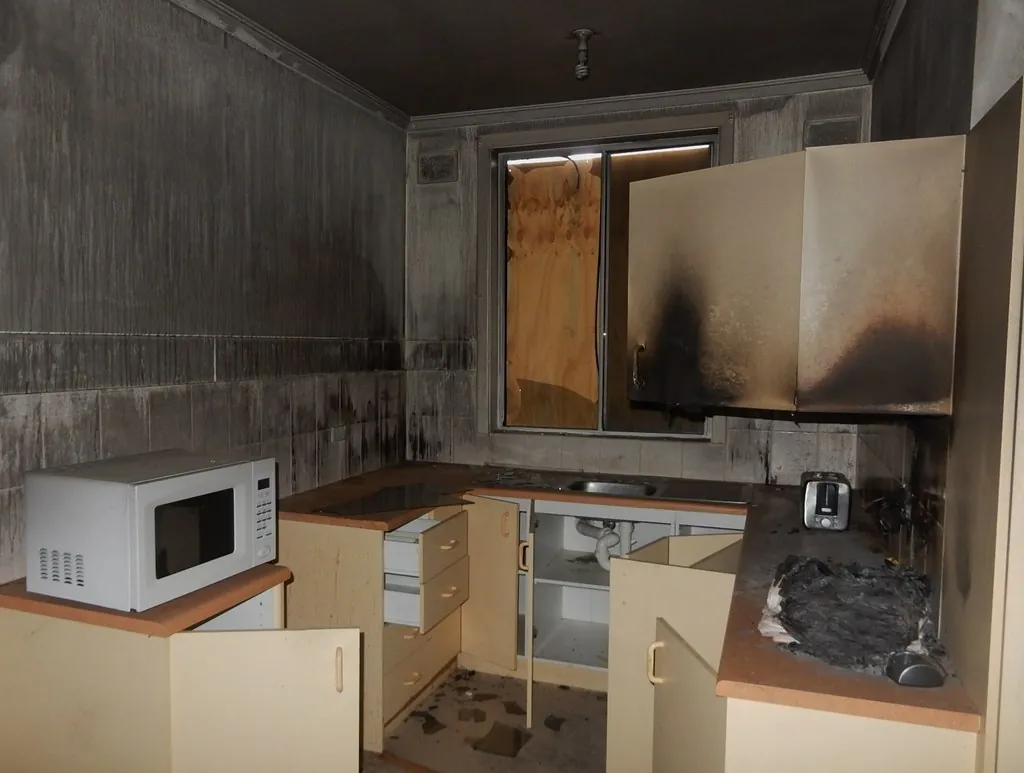
A kitchen fire — usually a cooking or grease fire — damages more than the stove: smoke and soot spread through the kitchen and into adjoining rooms, and grease residue coats cabinets, walls and ductwork. Cleanup means soot removal, odour treatment and repairs to the kitchen itself.
What a Kitchen Fire Damages (Beyond the Stove)
Cooking fires are the most common house fires, and the damage goes well beyond the stove. Smoke and soot spread through the kitchen and into adjoining rooms. Grease residue coats cabinets, walls, ceilings and ductwork. Heat damages countertops, flooring and appliances. And the fire extinguisher — if one was used — leaves a chemical residue of its own.
The kitchen is also the room with the most to lose: cabinets, appliances, countertops, flooring, and the contents of every cupboard. Each one is inspected, cleaned where possible, and documented for the insurance claim where it cannot be saved.
Grease Fire Smoke and Soot Cleanup
Grease fire soot is different from ordinary soot. It is sticky, and it bonds to surfaces instead of sitting on them. Cabinets, walls and ductwork need degreasing before soot cleaning, or the soot stays.
The cleanup is done room by room, starting with the kitchen and following the smoke into adjoining rooms. Contents are cleaned separately — dishes, cookware, food in sealed containers — and what cannot be saved is documented for the claim.
Kitchen Repairs After a Fire
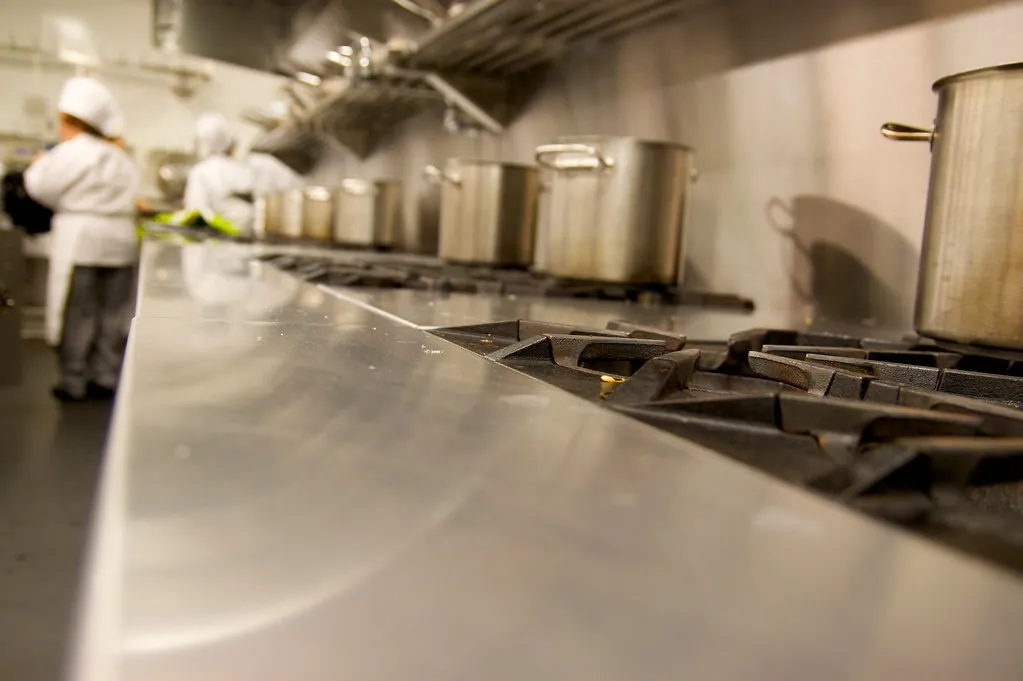
After cleaning, the kitchen needs repairs: cabinets, countertops, flooring, paint, and sometimes appliances. Whether appliance and cabinet replacement is part of the restoration job is confirmed with the contractor — the scope is an owner decision, not assumed here.
What the restoration job always includes is the cleaning, the odour treatment, the drying of any firefighting water, and the documentation for the insurance claim.
What to Do First After a Kitchen Fire
Stay safe first. If the fire is out and the home is safe to enter, do not turn the power back on, do not wipe soot, and do not use the kitchen. Photograph everything before you clean anything. Call your insurer, and call a restoration contractor.
The blog on kitchen fire: what to do first covers the steps in order, and the what to do after a fire guide covers the wider first hour.
Frequently Asked Questions
What should I do first after a kitchen fire?
Stay safe first. If the fire is out and the home is safe to enter, do not turn the power back on, do not wipe soot, and do not use the kitchen. Photograph everything before you clean anything. Then call your insurer and a restoration contractor.
Can I use my kitchen after a small grease fire?
Not until it has been inspected. Grease residue and soot coat surfaces you cannot see, and the smoke may have reached the ductwork. The kitchen should be cleaned and checked before it is used again.
How do you clean grease fire smoke and soot?
Grease fire soot is sticky and bonds to surfaces, so cabinets, walls and ductwork are degreased first, then the soot is cleaned. Contents are cleaned separately. The cleanup is done room by room, following the smoke into adjoining rooms.
Will a kitchen fire set off smoke damage in other rooms?
Yes — smoke follows air, and it travels through the kitchen into adjoining rooms and the ductwork. The inspection covers the whole home, not just the kitchen, because the smoke damage is often wider than the fire damage.
Does insurance cover kitchen fire damage?
Cooking fires are usually covered by a standard homeowners policy. Documentation decides the claim: photos before cleaning, an itemised list of damaged contents and appliances, and the contractor's notes.
Water, fire or biohazard damage in Salt Lake City? Call now.
One call connects you with an independent local restoration contractor.